Recent Posts

Fish with tomato sauce and potatoes

Fish with tomato sauce and potatoes

My Indonesian friend in Kuwait, Diana Loubry posted some photos of a fish dish her ex-chef husband cooked. It looked interesting AND low calorie so I promised myself I would try it one day when its fish day. I did today and it turned out 

Butter Prawns

Butter Prawns

I first discovered prawns at my brother’s house last year. Apparently it was Lela’s signature dish and she made it very well. We had already had lunch when we got there but we tasted a prawn or two and it was great! After that I 

Chinese-style stir fried beef

Chinese-style stir fried beef

We decided to have Malaysian food yesterday. I had never cooked stir-fried beef before and got it right but this method really works. The beef is succulent and not dry and hard. The rice vinegar is a good substitute for rice-wine and you can’t taste the vinegar.

IMG_0497

INGREDIENTS

450 gms beef (flank or top sirloin steak), thinly sliced
3 cloves garlic, crushed
Thumb-sized ginger, crushed
5 sticks spring onions, sliced diagonally (separate the white parts from the green)
Oil for stir-frying

Marinade:
• 2 tablespoons light soy sauce
• 2 tablespoons Chinese rice vinegar
• 1/2 teaspoon sesame oil
• 1 tsp cornstarch

DIRECTIONS
Slice the beef thinly across the grain. Mix the marinade and add to beef slices. Marinate beef for 15 minutes or longer. While beef is marinating, prepare the vegetables.

Heat wok and add 2 tablespoons oil. When the oil is hot, add the beef in batches. Stir-fry for a couple of minutes until it is nearly cooked. Remove from the wok and drain on paper towels if desired.

Clean out the wok, saving saving any juices. Add 2 – 3 tablespoons oil to the wok. When the oil is hot, add the ginger and garlic. Stir-fry briefly and add the white part of the spring onions. Stir-fry briefly then return the beef to the wok. Mix well and stir in the green part of the spring onions. Serve hot with rice.

Mauritian Rougaille Sauce

Mauritian Rougaille Sauce

When we were in Mauritius last year, we discovered this sauce one night at dinner in the main restaurant of the Oberoi where we stayed. It added punch to almost any mild curry dish they served at the restaurants! Then we asked for it to 

Buñuelos de pescado (Spanish fish fritters)

Buñuelos de pescado (Spanish fish fritters)

It was fish day today on the second day of our carb-free regime after the long holiday in Malaysia. And I wanted to make something different from the usual favourite fish dish, Baked Moroccan Fish. Hubby’s fish fritters recipe was just right. It was easy 

Food processors and blenders

Food processors and blenders

Blenders

What will a blender do?

A blender really will make very light work of blending soups – speedily, easily and to a good, smooth, uniform texture – and it can happily cope with as much as 1¾ pints (1 litre) of liquid at a time. This, for me, is its prime function. Home-made soups are cheap and easy, nourishing and comforting, and will always be part of my home-cooking repertoire.

What else can blenders do?

Processors are not always good for blending small quantities, so if you want a small amount of mayonnaise, hollandaise, breadcrumbs, pesto or anything else that needs some quick, brief blending, you will find a blender does a better job.

What doesn’t it do?

It won’t grate or chop; it pulverises but doesn’t actually chop. So herbs, for instance, just get mashed to a pulp, which is okay for pesto, but not for other things. Incidentally, I think a liquidiser is a more accurate title here than blender because it pulverises ingredients almost to a liquid.

What is the difference between a full-blown blender and the hand-held version?

Briefly, with a hand-held blender you have to do a little more work. In the goblet of a full-blown blender the ingredients are pulverised at the press of a button in seconds; with the hand-held version you have to manipulate it into the corners of bowls and pans to make sure the blades are reaching all the parts they need to. What you use is a matter of personal choice. Some may find the bother of washing a goblet a chore (though they are dishwasher-proof nowadays) and I have friends who say they prefer the hand-held version.

Do I really need a blender?

If you really don’t enjoy cooking, particularly making and eating home-made soups, I would say probably not. But I feel a serious cook will always appreciate having both a blender and a processor because the two together provide a wonderful service in so many different areas of day-to-day cooking.

Food processors

This is probably the most expensive kitchen item you will need to invest in. Although a food processor is not an absolutely essential piece of equipment, because you can certainly chop, grate, slice, knead and mix everything by hand, it does do all these things very quickly and efficiently and saves you time and energy. After years of using one myself, I am convinced every serious cook should have a processor – it’s a great piece of equipment.

Which processor?

There are dozens of different designs and sizes, but I would say that if you invest in the largest size, with the most powerful motor, you will have the best of everything. Remember, quality never comes cheap, and beware of what looks like a bargain but may have a short life and not do the job really well. A warning: the blade in the processor will wear out in time, so if your processor begins to show signs of not performing as it should, it probably needs a sharp new blade. This can be ordered from kitchen shops or direct from the manufacturer.

Know your processor

When you buy a processor and begin to use it, you will soon get the feel of how it performs. One of the most common misuses of a processor is to overdo it. This was much more of a problem before the pulse button was invented, when something chopped could become something puréed, over-processed nuts could become an oily, claggy mess and puréed meat make hamburgers or rissoles very bouncy! With the pulse button you can see what is happening after each burst, which is important, but care must still be taken not to over-process.

What does a food processor do?

First on the list is chopping, particularly large quantities. It can chop 1lb (450 g) of onions in seconds and will therefore save you masses of time. It can also chop other vegetables, fruits and nuts. I love my processor best when I feed it cubes of bread, which it instantly turns into breadcrumbs (some of you will be far too young to remember the tedious job of grating bread into breadcrumbs on the side of a grater).

Also, if you want to make a stuffing, the onions, breadcrumbs and herbs can all be whizzed together – a brilliant time-saver. It can also evenly chop meat much more efficiently than the old-fashioned mincers that squeezed the meat through the blades.

Slicing

Yes, it’s good at that too! With a special attachment you can deal with cucumbers, apples, cabbages, potatoes and whatever needs to be sliced evenly and precisely. You can even choose thick or thin slices.

Mixing and puréeing

There are a million and one things you can mix in a food processor: whole-egg mayonnaise, for example, can be mixed in moments. It can then be made into chunky tartare sauce, with capers, cornichons (baby gherkins) and parsley chopped in at the end – taste it and you’ll never want the shop-bought version again!

If you’re nervous about making pastry, or if the fat from the fridge is too hard to rub in by hand, the processor will make extremely good pastry, provided, at the end, you add the water a little at a time to get a good consistency. Sometimes, when you are serving vegetables, it’s nice to ring the changes and whip them into a purée. With a little crème fraîche and some butter, a processor will make a lovely smooth, velvety parsnip purée. I also like to add steamed swede and carrots to the bowl of the processor while they are still hot, and whizz them, not to a purée, but to the coarsely chopped stage.

Grating

Grating large quantities – not just of breadcrumbs – can be hard work by hand. A good processor will have a grating disc with various different settings so you can grate cheese and vegetables. It makes light work of something really hard, such as fresh coconut, and if you need a large amount of freshly grated Parmesan, it is all speedily and easily done.

Kneading

I have to confess that, although I like the idea of hand-kneading bread dough, it does rather sap your strength. So if you want the easiest home-baked bread in the world, it’s absolute bliss to let the processor, fitted with a special dough attachment, do all the hard work for you while you get on with something else. But there’s a warning here: in some processors the dough attachment does not operate very effectively and the processor can end up doing a shuddering dance all along the work surface. The most solid ones, therefore, are the best.

What doesn’t a processor do?

Number one on this list is mashed potatoes. It seems logical that a processor should do this, I know, but absolutely not. Something happens to them in a processor that makes them gloopy and glue-like – not nice at all.

Although you can make cakes (such as sponge cakes) with a processor, I feel the space inside the bowl is too confined and doesn’t let the air in. So I personally wouldn’t choose to make a cake in mine.

The same applies to whisking: there is a whisk attachment that allows you to whisk egg whites but, again, I feel I’m not going to get as much air in. However, this is a personal preference – you need to discover for yourself.

As for herbs, I feel a good sharp knife makes a better job of chopping herbs on their own (herbs added to other mixtures are fine). The processor can overdo the job and make them rather wet and soggy.

Soups can be puréed in a processor, and it’s good if you want a coarser texture, but it can only be done in very small quantities or it spills over and becomes very messy.

From Delia Online

http://www.deliaonline.com/equipment/food-processors-and-blenders.html

Pimiento and egg salad

Pimiento and egg salad

This salad is a great tapa eaten with bread and should be made at least the night before you want to eat it. And it keeps well in the fridge for many days! INGREDIENTS 3 roasted pimientos 2 teaspoons minced garlic 3 hardboiled eggs 2 

Vivian’s Char Kuey Teow

Vivian’s Char Kuey Teow

I spent Chinese New Year day this year at Vivian’s gorgeous house in Bukit Jelutong. She had a great concept for her special guests that day – hawker food freshly prepared! She had made her signature dish of Sarawak Laksa and then freshly fried Char 

Eat proper and save the world!

Eat proper and save the world!

By Dr Nor Ashikin Mokhtar

WONDER Woman does exist, but she does not wear a bustier, red boots, a tiara or indestructible bracelets.

Instead, she looks just like you and me.

We all have a bit of Wonder Woman inside each of us – a strong, powerful woman who uses her abilities to do good things and save the world.

Every woman is capable of doing great things – as mothers, wives, sisters, aunts, friends, colleagues and employers. Whether we are out there climbing the corporate ladder, helping others through community work or taking care of our families at home, we are often pushing our bodies and minds to the limit. At the end of the day, you may find extreme satisfaction in your professional, personal and domestic achievements, but it won’t do you, or anyone else, any good if you are worn out and unhealthy.

When you have a busy lifestyle, you may not be eating a healthy, balanced diet. You need a variety of foods that provide essential nutrients to help you stay energetic and alert, and prevent illnesses.

Women go through different phases in their lives: infancy and childhood (pre-adolescence), followed by adolescence, young adulthood, adulthood and mature adulthood (elderly).

At every phase of our life, depending on our social and professional roles, our bodies change and our day-to-day activities may be different. For instance, in the adolescent phase, our bodies are still developing, and we are doing activities that require a lot of energy. Meanwhile in adulthood, our bodies may be preparing for motherhood. Naturally, we have special nutritional needs, unique from that of men, because of our biological differences.

Of course, there are no such things as super foods, as all foods contain important nutrients and play a part in our daily diet. So-called health foods or miracle foods that you see in advertisements or stores are merely gimmicks. There is no single food or product that can guarantee weight loss or a cancer-free life.

However, you will find that certain foods are power-packed with essential nutrients, and are a must in your daily life.

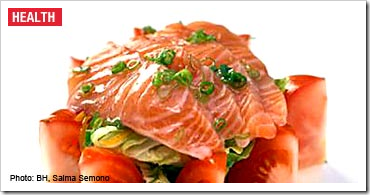
1. Fatty fish

image

Fatty fish like salmon, sardines and mackerel are rich in omega-3 fatty acids, particularly DHA (docosahexaenoic acid) and EPA (eicosapentaenoic acid), which are easily absorbed by the body.

These fatty acids are used by the body in important physiological processes, and help protect us from heart disease, stroke, hypertension and some illnesses linked to inflammation, such as lupus and rheumatoid arthritis.

Fatty fish are also good sources of protein, and are low in saturated fat and calories.

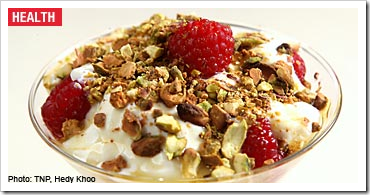
2. Yoghurt

image

Who would have thought that fermented milk would be so good for you?

Yoghurt is loaded with calcium, which is good for women because it builds strong bones and prevents osteoporosis (more common in older women). Yoghurt also contains good bacteria, which promotes a healthier immune and digestive system. Look for yoghurt that has higher levels of live cultures like Lactobacillus acidophilus.

If you’re worried about the calorie level, go for plain, low-fat yoghurt and leave out the fruit-flavoured varieties.

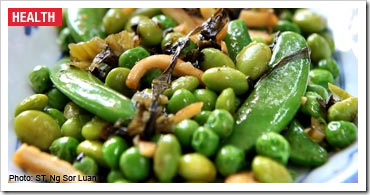
3. Beans

image

What’s low in fat, but high in protein and fibre?

All sorts of beans and legumes, like broad beans, peas, dhal, mung beans, kidney beans, red beans, black beans, lentils and soybeans. Beans and legumes are also believed to have protective effects against heart disease and cancer, and may play a role in regulating female hormones. They are also high in vitamin B and folate, which are important for pregnancy.

Best of all, there are so many different types of beans and legumes that can be eaten with a variety of meals and dishes, so you will never get tired of them!

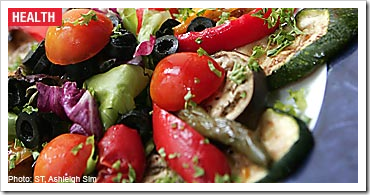
4. Colourful vegetables

image

Veggies aren’t just green – they come in all sorts of colours, and the more colourful your vegetable tray is, the better!

Dark green vegetables, like choy sum, kai lan, bok choy, spinach and broccoli, are packed with antioxidant vitamins A and C, iron, calcium and beta-carotene. Red and orange vegetables are even better sources of beta-carotene.

This component that gives fruits and vegetables their red and orange colours, is an antioxidant that is good for our immune system, heart and eyes. Think carrots, tomatoes, sweet potatoes, pumpkins, papayas and red peppers.

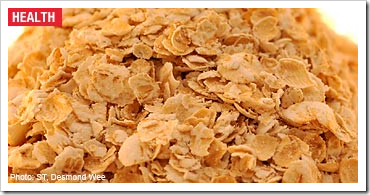
5. Oats

image

Finally, to round up the list of must-have foods on your shopping list – oats.

A wholegrain cereal that is high in fibre and low in saturated fat, oats are known to reduce high cholesterol levels and protect against heart disease. Oats are also high in protein (a good source of long-lasting energy) and antioxidants (good for general health and slowing down ageing). Oats can be consumed as oatmeal, cereal, muesli, bread or biscuits. It makes for a great breakfast and snack.

The five types of food above are not the only foods you should eat, as there are many other types of foods from the various nutrient groups that are good sources of energy, proteins, vitamins, minerals, fats and fibre. But having these five types on your frequent eating list will ensure that you get the best of all worlds.

What’s to stop you from being Wonder Woman now?

Datuk Dr Nor Ashikin Mokhtar is a consultant obstetrician & gynaecologist (FRCOG, UK). The information provided is for educational and communication purposes only and it should not be construed as personal medical advice. Information published in this article is not intended to replace, supplant or augment a consultation with a health professional regarding the reader’s own medical care.

Garbanzos con Arroz (Chick peas with rice)

Garbanzos con Arroz (Chick peas with rice)

From time to time, you “discover” a favourite dish and this is one of them. Hubby had told me about this dish which he cooked one day after chatting with a fellow Spanish friend at work, Carolina. It was her grandmother’s recipe. I instantly took 

Related Posts Plugin for WordPress, Blogger...