Pesto
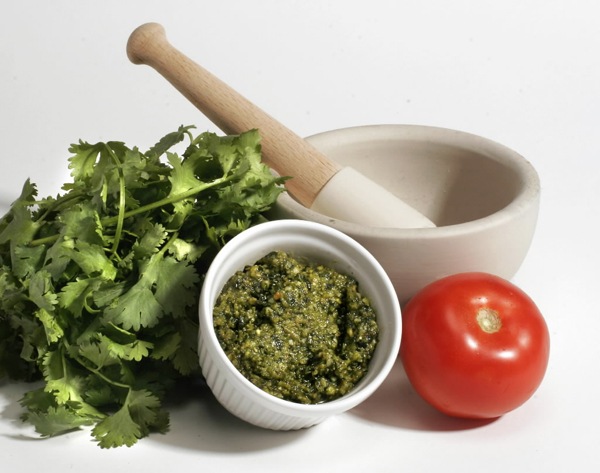
We use pesto in a few of our dishes – pasta, of course, Ensalada Caprese, and sometimes added to a salad dressing. Making fresh pesto doesn’t seem like a lot of work, but we’ve never ever done it, opting instead for the bottled version. We’ve used “Bertolli” and “Roland” and they have both green (basil) and red (sun-dried) pesto. Italian of course.
Genovese (green) Pesto is a paste made from garlic cloves, fresh basil and grated Parmesan cheese, pounded together and diluted with fine olive oil that is not too strong in flavor. It is said that olive-oil-based pesto is known as the oldest oily sauce in gastronomic history. Genovese pesto was traditionally enjoyed as an accompaniment to pasta.
The traditional way or the modern way?
Many cooks who want a fresh pesto save time by making pesto with a food processor or blender, but the traditional method is to use a mortar and pestle.
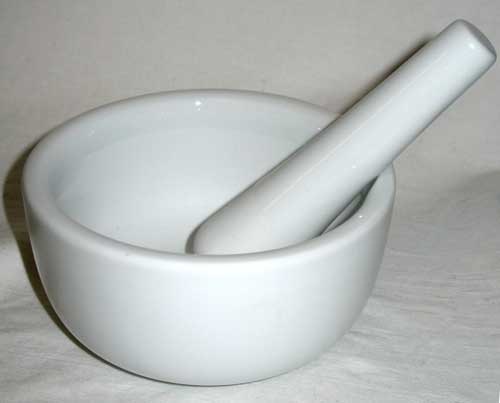
Pounding in a mortar releases more of the essential oils without cutting through the cell walls of the ingredients, yielding a silky, chunky texture with a refined flavor. Pesto made with a mortar and pestle also will yield a brighter color from the crushed herbs. While the texture is more uniform, the flavor is not balanced and may be too sharp. Using the food processor creates a pesto where the oils are not as intensely released because the cell walls are cut through.
INGREDIENTS
Makes 1 cup
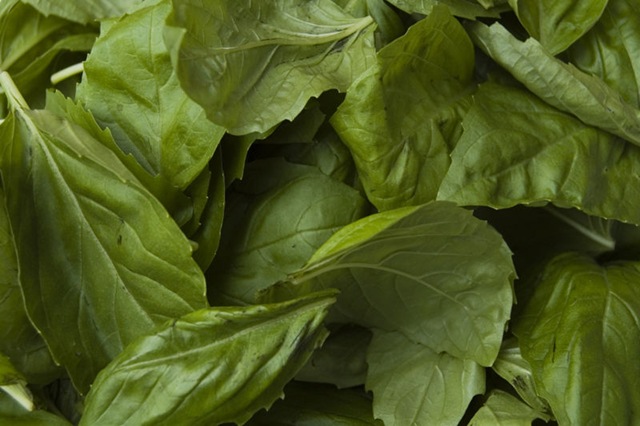
2 cups fresh basil leaves, packed
1/2 cup freshly grated Parmesan or Romano cheese
1/2 cup extra virgin olive oil
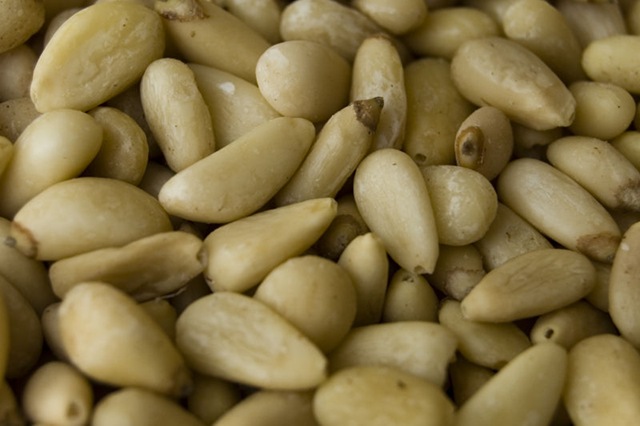
1/3 cup pine nuts or walnuts
3 medium sized garlic cloves
Salt
DIRECTIONS
To prepare the basil, remove the stems and lightly pack the leaves in a measuring cup until the desired amount is reached. Immerse the leaves in cold water and use your fingers to wipe away residue. Shake off the water and roll the leaves in a paper towel to dry or spin in a salad spinner. Be sure the herbs are well dried, because water makes it difficult to pound or puree the leaves.
The adage, “the fresher the garlic, the fresher the flavor,” is the key to making proper pesto. Peel the garlic and smash with the back of a knife if you like.
Pine nuts, or pignolia, are the traditional nuts used in pesto. While they can be added raw, toasting nuts in a dry pan and seeds in an oiled pan until golden, releases essential oils for a more intense flavor. While nuts can be toasted in the oven, they can be easily controlled from burning by using a stovetop. Make sure the nuts have cooled to room temperature before using them because warm nuts make pesto soggy. Walnuts are often used in stronger pestos and milder nuts such as pine nuts, unsalted pistachios or almonds are used in delicate pestos. For those with nut allergies, olives and capers, in addition to other ingredients, are good substitutes for nuts.
Begin by sprinkling coarse sea salt into a mortar and pound the garlic, salt and pepper together with the pestle.
Add a portion of the nuts and basil leaves along with a tablespoon of the olive oil and continue pounding, occasionally stirring everything together. Turn the pestle gently so that the basil leaves are torn rather than cut. Add more leaves and nuts and a little bit of oil. Continue crushing and stirring, adding more nuts and herbs while taking care not to add too much oil so it won’t be difficult to combine the ingredients.
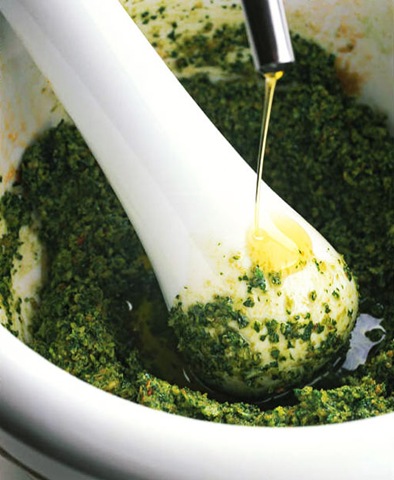
When a thick and fairly smooth paste is reached, slowly add the grated cheese and remaining oil, until it is incorporated into the pesto.
Pestos will keep in the refrigerator for three or four weeks. Pack the pesto into a small container, cover with a thin layer of olive oil and cap tightly to seal in the flavor and to avoid oxidation. Exclude as much air as possible to prevent loss of color, moisture and spoilage.

You must be logged in to post a comment.